Every Black Friday campaign needs a place to land. Weeks before the first ad runs, the hosting plan decides how well that place performs for each visitor. Merchants who prepare WooCommerce store for Black Friday with WordPress hosting for Black Friday in place give every ad, coupon, and email a dependable destination.
Sale season also brings the most generous hosting discounts of the year, which makes it the ideal moment to upgrade. Pairing a smart plan with focused WooCommerce store optimization turns that discount into faster pages and steadier checkouts. This blog will cover the features worth verifying before you buy.
Why Buy Hosting During Black Friday Sales?
Annual plans reach their lowest price of the year during Black Friday, and the discount covers the entire first term. That saving moves straight into advertising budgets and inventory, where it works harder than idle cash. Merchants who commit in November also secure a predictable hosting cost for twelve months. Early buyers gain time as well. A server that was migrated and tested in November can approach the sale weekend with confidence, while late buyers rush to set up during the busiest days.
Which Hosting Resources Should You Check?
Product pages, cart sessions, and payment requests all draw on CPU, RAM, and PHP workers. Plans with dedicated allocations keep each of these steady when a flash sale sends visitors in sudden waves. A plan should state its resource limits clearly. Hidden caps usually show up when traffic peaks.
Scalability deserves equal attention. A plan that upgrades within minutes, and without a migration, helps a merchant respond to a trending product before interest fades. Staging environments extend that flexibility, because teams test new themes and plugins away from the live store.
Which Speed Features Should Hosting Have?
Catalog loads begin at the storage layer. Product records load noticeably sooner from NVMe SSDs than from older drives. Returning visitors receive pages from LiteSpeed’s cache, and the latest PHP version reduces the time WooCommerce spends processing each request. Product pages respond promptly even during the busiest hour.
Distance shapes speed too. A content delivery network places images near each shopper, and a data center close to the target audience reduces latency further. Redis object caching accelerates cart and checkout actions, which are the pages that decide revenue.
Which Security Features Should Hosting Include?
Every request meets a web application firewall before WordPress responds. Scheduled malware scans flag altered files within hours. DDoS mitigation and login rate limits matter most during a sale, when bots target busy stores. Each tool covers a separate threat.
Payment data needs stronger cover than the rest of the store. SSL encrypts payments as they travel. PCI-aligned configuration then secures stored card information, and account isolation limits any compromise to a single website. A faulty plugin never reaches neighboring stores. Automatic patching closes known vulnerabilities before attackers find them.
Why Do Uptime and Support Matter?
A 99.9% uptime guarantee backed by service credits shows a provider trusts its infrastructure. Read the terms closely, because the definition of downtime decides what a credit covers. Advertising budgets depend on uptime. A visitor who clicks a paid link must land on a working page, or the spend is lost.
Sale days put support under peak demand. WordPress-trained teams on chat and tickets clear plugin conflicts and server errors faster than a general queue. Fast answers protect orders when every minute counts, and they keep the merchant focused on selling.
What Should Merchants Check Before Paying?
Introductory discounts often cover only the first term, and renewal rates differ widely between providers. Three terms deserve a check before payment: the renewal price, the refund window, and the migration policy. Together, they decide that long-term costs matter far more than the headline discount does. Stores hosted elsewhere should look closely at free migration.
Trial periods turn claims into evidence. Import a sample catalog, install the active theme, and run public speed tests during busy hours for a truer reading. Recent customer reviews add a second opinion on uptime records and support response times.
MilesWeb Black Friday WordPress Hosting Deals
MilesWeb delivers these technical features at attractive discounts through its Black Friday WordPress hosting plans. NVMe storage and LiteSpeed caching speed up product pages, a firewall with free SSL protects each checkout, and one-click staging supports safe testing before launch. Resources grow with each campaign, so merchants never need to change platforms.
Every plan also includes free professional email accounts and daily backups. After a failed plugin update, a recent backup from MilesWeb brings the website back in minutes. Order confirmations and campaign emails also look more credible from a branded address. Round-the-clock support completes a setup built for busy sale weeks.
Concluding Insights
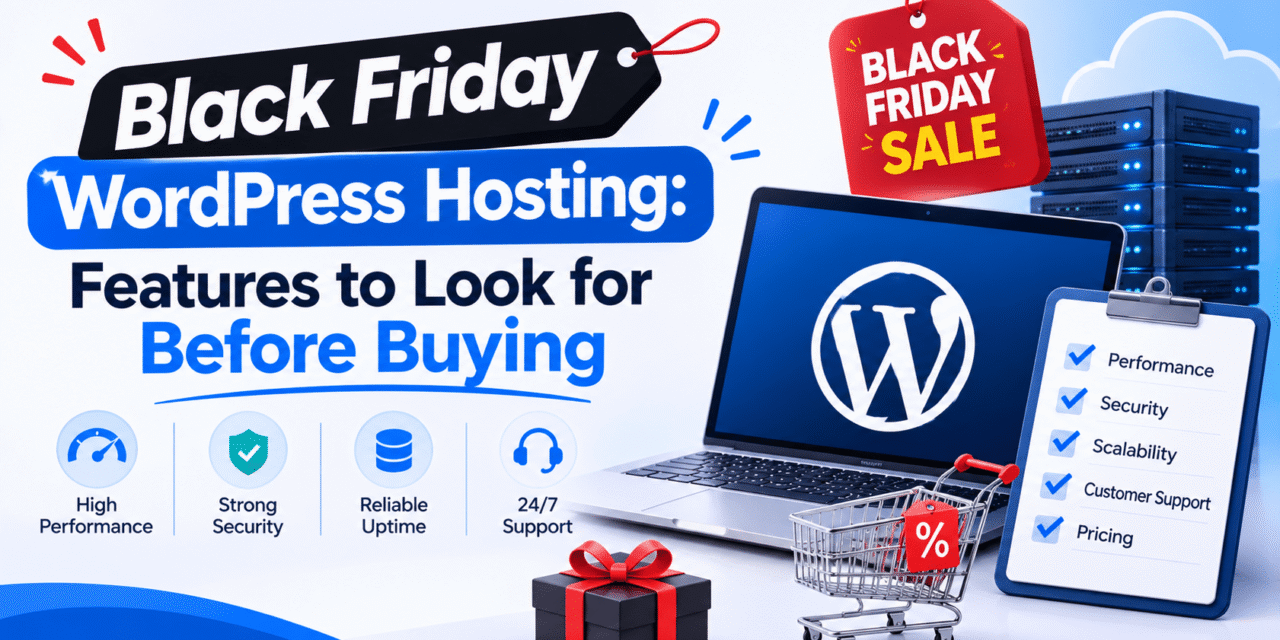
A Black Friday hosting decision works best as a scorecard. Capacity, speed, security, support, and renewal terms each deserve a clear verdict before payment, and a plan that earns strong marks across all five protects the weekend ahead. MilesWeb meets that scorecard with dependable technical features at sale-season discounts.
Once the right server is in place, attention shifts to the part merchants enjoy most: products, promotions, and loyal customers. Early preparation gives the team a calm start on Black Friday morning, and that steady footing carries through every order of the weekend.